
Why Your Gut Is the Gatekeeper of Your Weight
- Winfit With Vinali Date

- May 20
- 4 min read
Your gut is home to trillions of bacteria, collectively called your microbiome. This invisible ecosystem does far more than digest food it regulates inflammation, produces hormones, controls blood sugar, and even signals your brain about hunger and fullness. When this ecosystem is out of balance (a condition called dysbiosis), fat loss becomes frustratingly slow, no matter what you eat.
Research now shows that two people can eat the exact same meal and absorb completely different amounts of calories entirely based on the composition of their gut bacteria. That means two women on the same diet can get completely different results. This is not a mystery. This is your microbiome at work.
"Your body isn't broken. It's communicating. And most of the time, it's communicating through your gut."
Index
Signs Your Gut Health Is Affecting Your Weight
Many women dismiss these as "normal" but they're your gut's way of asking for help:
Gut Distress Signals in Women
You feel bloated after almost every meal, even healthy ones
Sudden sugar cravings, especially after meals
You gain weight easily but find it very hard to lose
Frequent mood dips, anxiety, or "brain fog"
Low energy even after 7–8 hours of sleep
Skin breakouts, especially hormonal acne
Irregular periods or worsening PCOD/thyroid symptoms
If you checked three or more of those, your gut health deserves immediate attention not another crash diet.
The Gut–Hormone–Weight Triangle
Here's something most fitness coaches won't tell you: almost 90% of your body's serotonin (your "happy hormone") is produced in the gut not the brain. When your gut is inflamed or imbalanced, serotonin production drops. Low serotonin triggers emotional eating, carbohydrate cravings, and disrupted sleep a triple hit that makes fat loss nearly impossible.
For women dealing with PCOD, thyroid conditions, or hormonal imbalances, the gut–hormone link is even stronger. An unhealthy gut increases circulating estrogen, worsens insulin resistance, and triggers cortisol spikes all of which promote belly fat storage. No amount of cardio or salads will fix a hormonal environment that is actively working against you.
Practical Ways to Heal Your Gut and Restart Weight Loss
The good news? Your gut is remarkably adaptable. With the right inputs, you can begin shifting your microbiome in as little as 2–3 weeks. Here's how:
1. Add Fermented Foods Daily
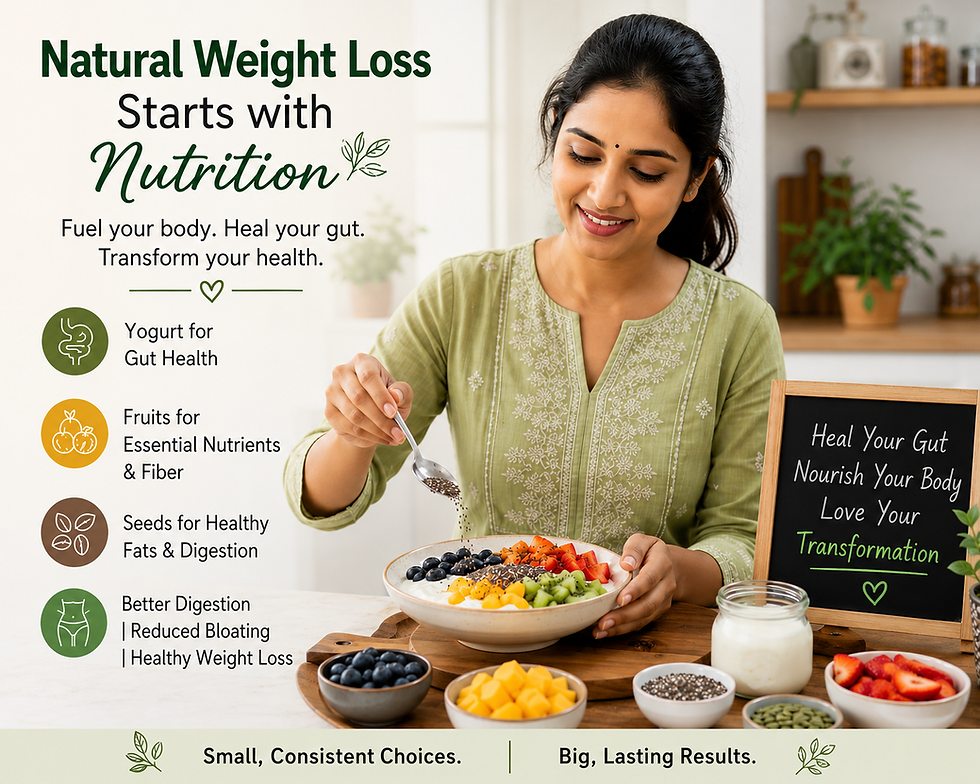
Curd (dahi), buttermilk (chaas), homemade pickles, and idli/dosa batter are all rich in live cultures that feed your beneficial gut bacteria. If you've been avoiding curd because "it's cold" your gut needs it more than you know. Aim for at least one serving per day at room temperature.
2. Feed Your Good Bacteria (Prebiotics First)
Probiotics (live bacteria) need food to survive inside you. That food is called prebiotics and it comes from fibre-rich plants. Bananas, onion, garlic, oats, flaxseeds, and legumes are all excellent prebiotic foods. Think of probiotics as seeds and prebiotics as the soil they need to grow.
3. Reduce Ultra-Processed Foods and Refined Sugar
Processed foods contain emulsifiers, artificial sweeteners, and preservatives that actively destroy beneficial gut bacteria. Even "diet" products with zero calories can severely disrupt your microbiome. You don't have to be perfect but reducing packaged snacks, instant noodles, and store-bought juices will create an immediate shift.
4. Eat at Regular, Predictable Mealtimes
Your gut bacteria follow a circadian rhythm just like you do. Irregular eating times (skipping breakfast, eating late at night) disrupt the microbiome's natural cycles and increase inflammation. Even if the food isn't perfect, eating at consistent times each day has a measurable positive effect on gut health and metabolic rate.
5. Manage Stress Your Gut Feels It Too
Chronic stress floods your body with cortisol, which directly kills beneficial gut bacteria and increases intestinal permeability (called "leaky gut"). Meditation, deep breathing, a 20-minute walk, or even five minutes of journaling can significantly reduce your cortisol burden. This is not a luxury it is a physiological necessity for fat loss.
What About Probiotics Supplements Do You Need Them?
Probiotic supplements can help, especially after a course of antibiotics or during high stress. But they are not a replacement for real food. The bacteria in a supplement cannot establish long-term colonies in your gut without the fibre and nutrients that whole foods provide. Always fix the diet first supplements support a good foundation, they don't build one from scratch.
If you have PCOD, thyroid issues, or a history of antibiotic use, a specific strain may be more beneficial. That's best discussed with a qualified nutrition coach who understands your full health picture not a generic recommendation from social media.
If you've already been eating well but your scale isn't moving, you may also want to read about why your weight loss plateaus and what your body is really telling you the two are often connected.
The Bottom Line
Sustainable weight loss is not just about what you eat it's about what your body can effectively process, absorb, and use. Your gut microbiome sits at the centre of all of that. No diet plan, no matter how perfect on paper, will work consistently if your gut is inflamed and out of balance.
The women I work with who see the most lasting transformations are the ones who stop fighting their bodies and start understanding them. Your gut is not your enemy. Once you learn how to support it, the weight loss you've been struggling with often begins to happen naturally without extreme restriction, without hours of exercise, and without guilt.
"Fitness is a journey, not a destination. And for many women, healing the gut is where that journey truly begins."


Comments